
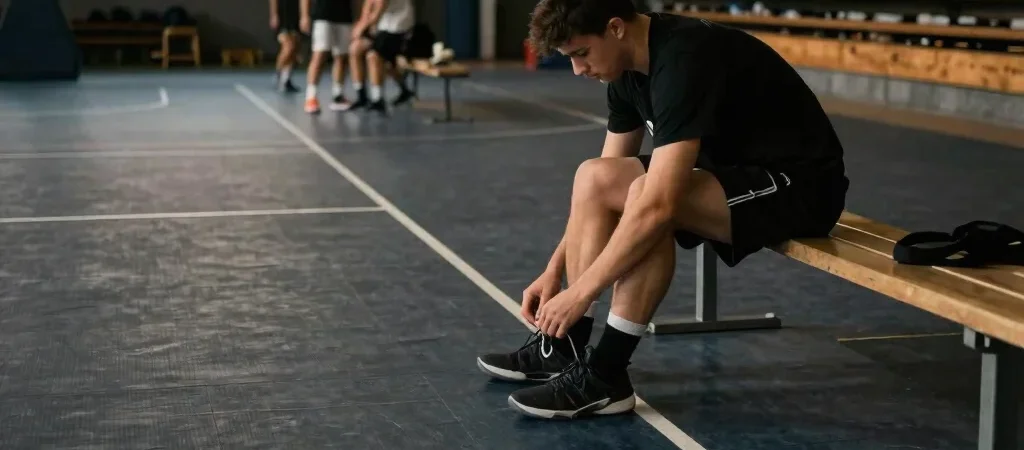
A player is moved to the bench, a teammate is rehabbing an injury, and practice carries on around them. Those moments rarely make a highlight reel, but they reveal whether belonging on a team depends on minutes played. Being a teammate is a role that continues when attention moves elsewhere.
When the Role Changes
Sport makes roles visible: starter, reserve, captain, newcomer. The harder work is learning not to confuse a role with a person’s value. A player who is not in the starting group can still prepare carefully, share what they see from the sideline, and make room for a teammate to find their footing.
Leadership Without the Spotlight
Leadership is often less dramatic than a speech before a game. It can look like arriving ready when a season feels repetitive, checking in with someone whose place has changed, or keeping a standard when no one is keeping score. These choices do not guarantee a result; they do shape the experience of being part of the group.
A Practice for Belonging
Faith and sport can meet in the way people treat one another when status is uneven. That does not require turning every practice into a lesson or pretending disappointment disappears. It means taking seriously the small obligations of a shared team: show up, pay attention, and do not make another person earn basic respect through performance.